DR. HOGAN PESANIELLO

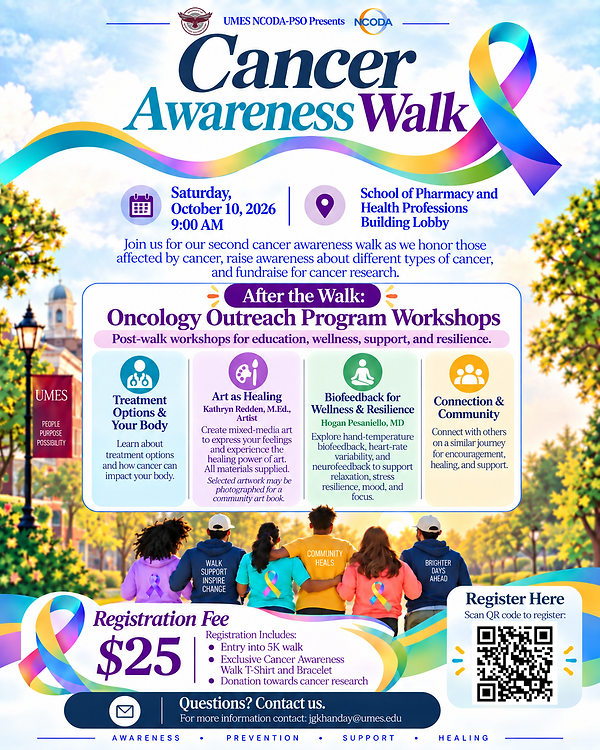
Upcoming opportunity to learn about biofeedback and neurofeedback at the annual Cancer Awareness walk/run and workshop at Univ of MD Easter Shore next month:
Dr Pesaniello will be there running one of the break out sessions, for three hours, presenting on the info and skills you need to develop and explore to use biofeedback or neurofeedback to improve your stress resilience or your stress related condition or improve. your performance in work, school, relationships, sports, parenting, etc:
Hogan Pesaniello, MD is a physician practicing psychiatry in Snow Hill, and director of Willow Street Wellness and Neurofeedback.
• Trained in medicine then psychiatry at Johns Hopkins.
• Psychiatric practice 30+ years
• Utilizes psychotherapy, group therapy, and medications as appropriate.
• For over 15 years, she has found added power to help patients with stress-related challenges by including neurofeedback and biofeedback in her tool bag.
• She opened Willow Street Wellness to make the biofeedback and neurofeedback tools more available to the community.
• She has technicians available to work with individuals to make the tools more accessible for improving stress resilience.
• Biofeedback (BF) and Neurofeedback (NF) can improve stress related conditions like irritable bowel, mood issues, migraine pain and frequency, anxiety. They can improve brain fog, and attention and impulse control.
• BF and NF can also improve performance in work, school, sports and the arts, and can improve relationship skills.
• She is also available to instruct clinicians in use of these modalities.
Biofeedback tools: work through displaying to a person, using simple sensors, a measure of their body’s physical output. For example: heart rate variability, hand temperature, or the brain’s eeg or infrared output are measured with a sensor. Then the person, practicing regularly with a little coaching, and simply watching the sensor display, learns to change the body physiology toward more flexibility and endurance. This happens without “understanding”, through the unconscious connections of the brain to the body, and by simply seeing the feedback. This practice can translate into better health and performance outcomes. It can be an important tool in prevention.
Learn more on this website where you can see more info under the neurofeedback and HRV and pirHEG neurofeedback tabs, as well as YouTube presentations by Dr. Pesaniello at Tidal Health and for MedChi (Maryland Physicians Organization):
At this cancer workshop, Dr. Pesaniello will provide 20-30 minute experiential sessions sessions rotating through:
- hand temperature biofeedback (learn -- and practice -- the approach to use to improve relaxation and stress resilience with and without the feedback tool, as well as how obtain one and to use the feedback tool and monitor progress)
-Heart rate variability feedback (learn the approach to use to improve relaxation with or without the feedback tool, as well as how to obtain and use the feedback tool and monitor progress)
-pirHEG neurofeedback and eeg neurofeedback (learn the relevance of these tools to emotional regulation, improved executive function, and addressing brain fog, mood issues, post concussive issues and migraine pain and frequency. Find out cost effective ways to access or explore these.
Participants can gain skills to practice on their own, and some understanding of how to use wellness tools for biofeedback they can practice on their own. Gain more understanding of neurofeedback and it’s relevance to both improving life performance and health outcomes.
Learning of a cancer diagnosis can be very stressful. Optimizing stress resilience is simply a way not only to improve general effectiveness and performance in life, but it can be a key factor in optimizing health and an important tool in navigating all challenges whether it is a period of dealing with cancer or other stress-related conditions.